Juan Antonio Rodríguez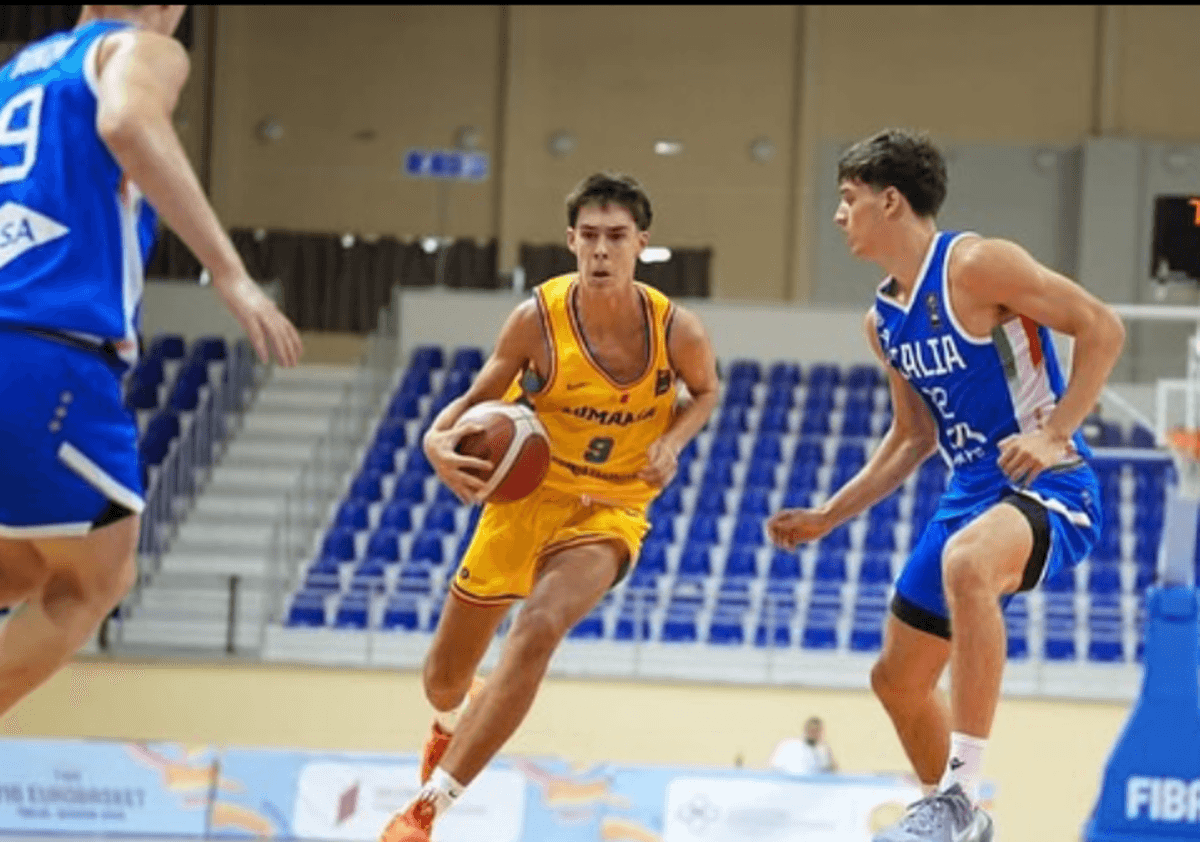
Remi Stănescu is a young Romanian player born in 2009 who is at the Lucentum Academy Foundation in Alicante, developing as a player and aiming to turn professional thanks to the Alicante-based project that brings together many young people with the same dream.
_
Thanks to Ionut Georgescu, technical director of the Lucentum Alicante academy, we can chat with this player who knows no bounds in the not-so-distant future.
Juan Antonio Rodríguez (JA) – Hi Remi, how did the opportunity to join the Lucentum Foundation come about, and what made you accept this challenge?
Remi Stănescu (RS) – It happened a year and a half ago, that is, two summers ago, when I had the opportunity to go to the Lucentum Camp organized by Ionut. He and my father have known each other for a long time, since they worked together for a club in Romania, so I already had some initial knowledge about the club and some information about the camp they were running in Bucharest.
Once I started training with Spanish coaches, I noticed the difference in the intensity of the workouts and the variety of new exercises I hadn’t done before. Therefore, I started getting more involved and researching their senior and junior teams, and I thot it was an incredible opportunity to take my basketball skills and knowledge to a different level by being on a completely different training regimen and taking on the new responsibility of looking after myself. So I talked to my parents and we decided to give it a try and try to overcome the challenges that would come our way.
JA – You mentioned your family, who we understand have always been an important support. If you don’t have them nearby, how do they cope with you being far away, and how important are they in this decision?
RS – My entire family is or has been involved in sports at some point, especially basketball, and it’s been passed down from generation to generation, and I hope it continues in the future. They were the ones who first told me about the Lucentum Camp and have supported my decision to leave home, even tho it’s one of the hardest things they’ve ever done.
My mother was a basketball player, my sister is one now, and my father was a legend in Romania and is still involved, helping athletes fulfilll their dreams thru his sports programs. At first, it was especially difficult for the four of us not to live in the same house every day, but with daily calls and regular visits, we managed to adapt, and I’m grateful every day because without them this wouldn’t have been possible.
JA – Now that you’ve been on this project for a while, what do you expect from your time in Alicante?
RS – First of all, I hope to improve significantly and develop all my skills: shooting, finishing, ball handling, and rebounding; but not only on the court, also off it, such as learning to take care of myself, cooking healthy meals for myself, keeping my room clean, and, at school, learning to study efficiently on my own. But above all, I hope to develop as a person.
Secondly, I aspire to become a professional basketball player, and I hope that my performance in Alicante will attract the attention of world-renowned clubs that can help me achieve my dreams and pursue my passion.
JA – What is the Lucentum Foundation giving you, both as a player and as a person?
RS – As a player, it contributes to my success in my athletic career by providing me with advanced training plans, equipment, and experienced coaches at both the junior and senior levels.
As a person, they help me improve my work ethic, discipline, and communication skills, not only as a friend but also as a leader, and they pave the way for my transformation into a mature adult.
JA – How important do you think academies like Lucentum are in the development of young people?
RS – Academies are very important, especially for young and international players, as they allow them to experience a completely different perspective on what it means to play a professional sport. These types of academies, from my perspective as a player at the Lucentum academy, help foster a better understanding of what you’re committing to and what sacrifices you must make to pursue your dreams. This is what makes the academy special: its focus must be on your development and adaptation to these circumstances.
JA – How are you doing being away from home, and what’s it like living in Alicante?
RS – At first it was really hard not waking up at home, having to do all the cleaning, wash my clothes, and take responsibility for my actions on and off the track, but once I managed to change my behavior and start getting organized, I began to notice the advantages of being able to manage myself and have everything exactly as I’d planned.
Additionally, I realized I was in a completely new city, with a different culture and people, and that sparked my curiosity, so I began exploring not only where I lived but also the city center, the restaurants, and the beach, all of which made my adjustment much easier.
JA – What challenges do you face in the medium to long term?
RS – I always try to set very high goals so I can strive to reach them as much as possible until I finally achieve them and realize that I can accomplish anything I set my mind to. Therefore, in the medium term, I want to be able to play with great confidence in the Third FEB Division and be a key contributor to its victories and to the season overall. Not only that, but one of my goals would be to start training next season with Primera FEB, Lucentum’s first team, which is currently in a very good position in the championship.
As for my long-term goals, I aspire to continue my professional basketball career in college or with a good team in Europe, and then return to Europe to play for a EuroLeague team or enter the NBA draft if I improve dramatically. I know this may seem like a very ambitious goal, but I firmly believe that if I put my whole heart into it, I can achieve anything I set my mind to.
JA – At the national team level in 2026, you have the U18 European Championship, in which you’ll almost certainly be present. Is the Romanian national team’s goal to take the next step and move up to Level 1 to compete against teams like Spain?
RS – Last summer, the U16 national team competed in Division A of the European Championship, where we managed to maintain our position, allowing the next generation to compete at this level as well. It was an incredible experience, and I’m glad I was able to be a part of it, and I’d love to relive it when the time comes.
Currently, in the second division, there’s always greater competition and aggressiveness when it comes to the possibility of promotion to Division A. That would also be our goal: to be able to compete against and beat the best players in Europe, and to give future generations the opportunity to showcase themselves and compete at a level similar to what we were able to.
JA – For anyone who hasn’t seen you play, what position do you play and what do you think are your strengths and areas for improvement?
RS – Currently, I tend to play almost every position, mainly the 3 and 4, as I try to be both an aggressive scorer and dominant in the low post, on the boards, and on defense overall. One of my goals is to be able to play consistently at the point guard and shooting guard positions, since at higher levels these advantages would give me an edge and make me a more well-rounded player.
I would say my main strengths are finishing strong and quickly around the basket, rebounding, mid-range shooting, and both interior and perimeter defense. One of the main things I’ll improve in the near future will be my three-point shooting and full-court defense/pressure. I’ll also improve my ball-handling, since being a tall player requires more technical training than a shorter, faster point guard would.
At CampoAtrás, we appreciate the Lucentum Foundation’s willingness to chat with its young talents, and we’ll be keeping an eye on their progress—because, judging by Remi’s attitude, he’s destined to reach the very top of the basketball world, and we’ll be here to tell you all about it.